
Respiratory infections can occur at any time but are more prevalent in the winter and spring or with drastic weather changes. An adult may just experience a severe dose of flu whereas as a young child may easily develop more serious respiratory symptoms which require immediate medical attention. The reason for this is that a young child’s airways are not as well developed as those of an adult.
 Young children and babies naturally have a higher resistance to breathing in (inspiration) than an adult because their airways are smaller. This resistance to inspiration can be increased in the presence of a respiratory infection. A respiratory infection may cause the child’s airways to become inflamed. This can lead to difficulty in breathing (wheezing).
A respiratory infection often results in the production of mucus in the child’s small airways (bronchioles). The mucus may cause further obstruction of the airways and in turn increase the resistance to breathing.
The muscles in the walls of a young child’s airways offer less support than those of an adult because they are not as strong. These muscles tend to tire more easily than those of an adult and may lead to respiratory distress.
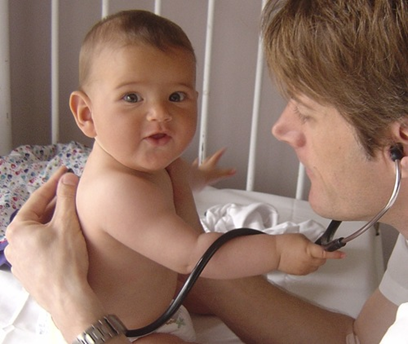
A child with a respiratory condition should be assessed by a medical practitioner to determine the appropriate treatment for example medication and home care or possible admission to hospital. Physiotherapists play an important role in the management of respiratory conditions. Various physiotherapy techniques and modalities are effective in clearing mucus from the nasal passages and lung airways.